How big do cockatiels get
How big do cockatiels get? Adult cockatiels typically grow to around 12–13 inches (30–33 cm) from the top of the crest to the tip of the tail and usually weigh between 75 and 120 grams. These popular parrots have slender bodies, long tail feathers, and expressive crests that make them appear larger than they really are. If you are thinking about bringing a cockatiel home, understanding its adult size will help you choose the right cage, prepare a comfortable living space, and recognize what healthy growth looks like.
How Big Do Cockatiels Get When Fully Grown?
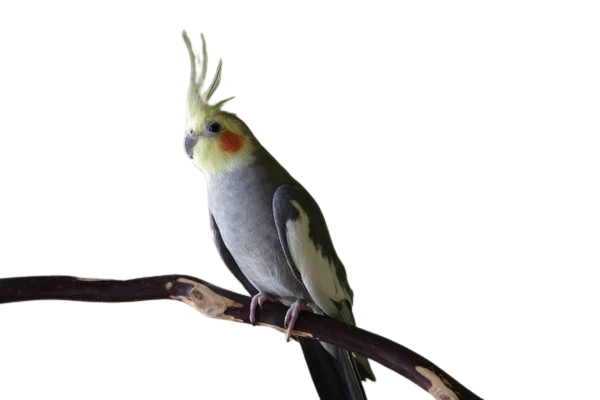
Cockatiels are small members of the cockatoo family, but their long tails and upright crests give them a distinctive appearance. When someone asks me about cockatiel size, I usually explain that the bird’s total length can be misleading. A substantial part of that measurement comes from the tail rather than the body itself.
Most adult cockatiels measure about 12–13 inches from the crest to the end of the tail. Some individuals fall outside this range because of differences in genetics, feather length, and body proportions.
Their weight is another useful measurement. Many healthy adults weigh between 75 and 120 grams, although a bird’s natural build and condition influence where it falls within that range. A heavier cockatiel is not necessarily healthier, and a lighter one is not automatically underweight.
What matters most is the bird’s overall condition. Its breast muscle should feel appropriately developed, its keel bone should not be excessively prominent or buried under excess fat, and it should remain active and alert. An avian veterinarian can help establish a healthy target weight for an individual bird.
Cockatiel Size Chart
| Growth or body measurement | Typical size |
|---|---|
| Adult total length | 12–13 inches (30–33 cm) |
| Adult body weight | Approximately 75–120 grams |
| Approximate wingspan | Around 12–18 inches (30–46 cm), depending on the individual |
| General growth period | Most adult dimensions develop during the first several months |
| Expected lifespan | Commonly 15–25 years or longer with appropriate care |
These figures are general guidelines, not strict limits. Individual birds can differ, and a single measurement should never be used to diagnose a health problem.
How Big Are Baby Cockatiels Compared With Adults?
Baby cockatiels start life completely dependent on their parents. They hatch with their eyes closed and little developed feather coverage, so they look quite different from the elegant, crested birds people recognize in pet shops.
As nestlings grow, their feathers emerge, their bodies become stronger, and they begin developing the proportions of an adult cockatiel. The speed of this process varies with nutrition, genetics, and general health.
Young cockatiels usually approach their adult size within their first few months. However, reaching a typical body length does not mean that every aspect of development is complete. Feather condition, coordination, confidence, and independent feeding develop on their own timelines.
When choosing a young bird, do not judge its health by size alone. A properly weaned cockatiel should eat independently, maintain a stable weight, and show normal alertness and activity. Ask the breeder about its age, diet, and growth history.
I would also be cautious about buying a particularly small bird simply because it looks appealing. An unusually small or underweight cockatiel may need medical assessment rather than special treatment based on appearance alone.
Do Male and Female Cockatiels Grow to Different Sizes?
Male and female cockatiels are generally similar in size, and there is considerable overlap in their weight and length. Some individuals may be larger or heavier than others, but body dimensions alone are not a reliable way to determine sex.
People sometimes expect male cockatiels to be noticeably bigger. In practice, the difference is not consistent enough to identify a bird confidently. Plumage characteristics can provide clues in certain colour varieties after the first molt, but mutations and individual variation can make visual identification difficult.
If knowing the sex is important for breeding or choosing a companion, ask for reliable documentation or consult an avian veterinarian about DNA sexing.
Do Cockatiel Colour Mutations Affect Their Size?
Cockatiels come in several attractive colour varieties, including lutino, pied, pearl, cinnamon, and white-faced. These mutations change the appearance of the feathers, not necessarily the bird’s overall dimensions.
A lutino cockatiel, for example, can be just as compact as a normally coloured grey cockatiel. Likewise, a white-faced bird does not automatically grow larger because its face lacks the familiar yellow colouring.
Genetics still influence the size of individual birds, of course. But when choosing a cockatiel, focus on its health, temperament, and care requirements rather than assuming a particular colour mutation will produce a larger or smaller pet.
Choosing the Right Cage for a Cockatiel’s Adult Size
Knowing how big cockatiels get is especially useful when buying a cage. A bird may look comfortable in a small enclosure while it is young, only to have limited room once its tail feathers grow and it becomes more active.
For one cockatiel, a cage measuring approximately 24 inches wide, 24 inches deep, and 30 inches high (61 × 61 × 76 cm) is a reasonable starting point, although a larger enclosure is preferable when space allows. Horizontal room matters because cockatiels need to climb, stretch their wings, and move between perches.
Look for a cage with:
- Bar spacing of approximately 1/2–5/8 inch (1.3–1.6 cm), suitable for most cockatiels.
- Enough room to spread both wings without touching the sides.
- Multiple appropriately sized perches that support comfortable foot positioning.
- Safe, bird-friendly materials and a secure door.
- Space for food bowls, water containers, and enrichment toys without blocking movement.
The cage should not be the bird’s only opportunity for exercise. Supervised time in a bird-proofed room allows additional movement and exploration.
Avoid placing the enclosure near cooking fumes, smoke, strong chemical vapours, or areas where the bird may be exposed to sudden temperature changes. A well-designed cage is important, but its location matters just as much.
Listicle: Top Places to Find Cockatiels and Responsible Breeders
If you are planning to buy a cockatiel, choosing a trustworthy source is more important than finding the largest bird or the lowest advertised price. The following options can help you begin your search. They are categories of sellers and services to investigate, not a verified ranking of individual breeders.
1. Specialist Cockatiel Breeders
A breeder who regularly works with cockatiels should be able to explain the birds’ ages, feeding routines, socialization, and general health. Ask how the birds are raised and whether you can see their living conditions.
2. Established Parrot Aviaries
A responsible aviary should provide clean housing, suitable diets, safe perches, and enough room for movement. Ask how the breeder manages disease prevention and whether young birds are fully weaned before sale.
3. Small-Scale Bird Breeders
Smaller operations may offer more individual information about a bird’s personality and background. However, the size of a breeding operation does not automatically determine its quality.
4. Avian Veterinary Referrals
An avian veterinarian may be able to suggest reputable local bird breeders or explain what a new owner should check before purchasing. A referral is useful, but you should still assess the seller independently.
5. Bird Rescue and Adoption Organizations
Adoption can be an excellent choice for someone open to an adult cockatiel. Ask about the bird’s previous environment, behaviour, diet, and any known medical needs.
6. Experienced Companion-Bird Sellers
A reputable seller should welcome reasonable questions and provide clear information about the bird’s background. Be cautious if you are pressured to pay immediately or discouraged from asking about health.
7. Breeders Who Provide After-Sale Guidance
Cockatiels need care long after the purchase. Look for a breeder who can discuss nutrition, cage setup, safe handling, and how to help a bird settle into a new home.
Cockatiel Parrots for Sale Near Me
When searching for Cockatiel Parrots for Sale Near Me, it helps to look beyond photographs and advertised prices. A healthy cockatiel should be alert, responsive to its surroundings, and able to perch normally. Its feathers should be reasonably clean and well maintained, and its breathing should appear comfortable. These observations cannot guarantee that a bird is healthy, but they can help you identify concerns before making a commitment.
Start by looking for specialist breeders, established bird shops, or reputable bird adoption organizations in your area. Ask about the cockatiel’s age, current diet, weaning status, and any available veterinary records. If possible, arrange to see the bird in person and observe how it behaves without forcing it to be handled.
Before paying, make sure the bird is fully weaned and eating independently. Avoid sellers who offer to send home an unweaned chick without appropriate professional support. Hand-feeding is not a shortcut to creating a tame companion; mistakes can cause serious injury or illness.
Also consider the cost of a suitable cage, food, toys, and veterinary care. The purchase price is only one part of responsible ownership.
If you find several Cockatiel Parrots for Sale Near Me, compare the sellers’ care standards, transparency, and willingness to answer questions. A slightly longer search is worthwhile when it helps you choose a bird whose needs you can meet for many years.
Conclusion
How big do cockatiels get? Most adults reach approximately 12–13 inches (30–33 cm) in total length and weigh around 75–120 grams. Their long tails contribute substantially to their measured length, while individual genetics and condition account for some variation.
Understanding adult size helps you prepare the right enclosure, choose suitable perches, and monitor your bird’s growth. Remember that a healthy cockatiel is not simply one that reaches a particular weight. Activity, feather condition, appetite, and consistent body condition are important, too.
Whether you are choosing a young cockatiel or adopting an adult, take time to assess its health and prepare a safe environment. With appropriate nutrition, room to exercise, companionship, and regular veterinary care, these small parrots can become wonderful long-term companions.
Frequently Asked Question
What is the maximum size a cockatiel can reach?

Most pet cockatiels measure around 12–13 inches (30–33 cm) from crest to tail, although some individuals may be slightly shorter or longer. Their weight commonly falls between 75 and 120 grams. A cockatiel outside these typical measurements is not necessarily unhealthy, but a sudden change in weight or an unusually thin appearance deserves attention. If you are concerned about your bird’s size, ask an avian veterinarian to assess its body condition rather than comparing it with another cockatiel.