Can cockatiels talk
Can cockatiels talk? Yes, cockatiels can learn to mimic human words, whistles, and familiar household sounds, although some become much better talkers than others. From a breeder’s perspective, patience and the individual bird’s personality matter more than simply choosing a young cockatiel. Male cockatiels are generally more likely to develop a larger vocabulary, but females can also learn sounds and occasionally words. If you are thinking about bringing one home, understanding how cockatiels learn, when to start training, and what to expect will help you choose the right companion
Can Cockatiels Talk Like Other Parrots?
Cockatiels can imitate human speech, but they are usually better known for their whistles, melodies, and distinctive calls. Unlike some African grey parrots, which may develop extensive vocabularies, a cockatiel might learn only a handful of words. Another bird in the same home could surprise you by copying an entire tune.
The difference comes down to the individual bird, its surroundings, and the sounds it hears regularly. Cockatiels are social animals, so they often pay attention to familiar voices and household routines. A bird may learn to say “hello” when someone enters the room or whistle when it hears a favorite song.
It is worth remembering that mimicking words does not necessarily mean a cockatiel understands language as a person does. It may associate a sound with a particular activity, response, or reward.
Do Male or Female Cockatiels Talk More?
Male cockatiels are generally more inclined to whistle, sing, and imitate sounds. Females often have a more limited vocal repertoire, although there are exceptions. Sex alone cannot predict a bird’s ability with certainty.
If talking is important to you, ask the breeder about the bird’s existing vocal habits rather than relying only on its sex. Also, remember that some cockatiels are naturally quiet. That does not make them less affectionate or suitable as companions.
How to Teach a Cockatiel to Talk


12
Teaching a cockatiel to talk starts with trust. A bird that feels secure around you is more likely to engage with your voice and pay attention to repeated sounds. There is no need to rush the process.
1. Start with one easy word
Choose a short word such as “hello,” “hi,” or the bird’s name. Repeat it clearly using the same tone whenever you approach the cage or offer a favorite treat. Keeping the word consistent makes it easier for your cockatiel to recognize the sound.
2. Train in short sessions
Try a few minutes of practice at a time when your bird is relaxed and alert. Long sessions can become tiring, especially for a young or newly settled cockatiel. If the bird turns away, becomes nervous, or loses interest, give it a break.
3. Reward small attempts
Offer praise or a tiny, appropriate treat when your cockatiel makes an effort to copy the sound. At first, the result might be an unclear syllable or a whistle rather than a recognizable word. That is fine. Rewarding progress can help maintain interest.
4. Talk during everyday activities
Use the same phrases when feeding your bird, greeting it in the morning, or preparing to leave the room. Regular interaction gives the cockatiel more opportunities to hear and practice familiar sounds.
5. Be patient with the results
Some cockatiels begin mimicking relatively quickly, while others take months or never learn human words. Avoid shouting, punishment, or withholding necessities to encourage speech. Positive reinforcement and a secure environment are better approaches to training.
+2
What Sounds Can Cockatiels Learn?
Human speech is only one part of a cockatiel’s vocal ability. Many birds find whistles particularly appealing, and some can reproduce familiar melodies with surprising accuracy.
Common sounds cockatiels may learn include:
- Simple words: “Hello,” “goodbye,” and a person’s name.
- Short phrases: Familiar expressions repeated consistently around the home.
- Whistled tunes: Simple melodies that the bird hears frequently.
- Household sounds: Certain electronic beeps, notification tones, and other repeated noises.
- Personalized calls: Sounds that become part of the bird’s daily interactions with its family.
Not every bird will copy all these sounds. A cockatiel may prefer whistling and never develop clear speech, even when its owner practices every day.
Listen to your bird’s natural vocalizations, too. Chirping, contact calls, and whistles are normal ways cockatiels communicate. A sudden change in vocal behavior, particularly alongside reduced appetite, fluffed feathers, or unusual lethargy, deserves attention from an avian veterinarian.
A Buyer’s Guide to Choosing a Talking Cockatiel
If you are hoping to buy a cockatiel that talks, the best approach is to look for a healthy, well-socialized bird and ask honest questions about its behavior. No responsible breeder can guarantee that a bird will develop a particular vocabulary.
What to look for in a breeder
Rather than relying on an unverified online list of supposedly top breeders, use these practical checks when comparing sellers in your area.
- Health and condition: Look for bright, attentive behavior, clean feathers, clear eyes, and comfortable breathing. These observations are useful but do not replace a veterinary examination.
- Weaning status: Choose a fully weaned bird that eats independently. Avoid buying an unweaned chick unless you are working under qualified professional guidance.
- Socialization: Ask how the bird has been introduced to people, household sounds, handling, and normal daily activity.
- Vocal history: Ask whether the bird already whistles or imitates words, and request an honest description of what the breeder has observed.
- Age and sex information: Ask for the bird’s hatch date, if known, and whether its sex has been confirmed. Visual identification is not reliable for every color mutation.
- Living conditions: Check that the birds have clean housing, suitable food, fresh water, enrichment, and adequate space.
- After-sale guidance: A good seller should be willing to explain feeding, settling-in routines, safe housing, and when to seek veterinary care.
Cockatiel varieties and speech potential
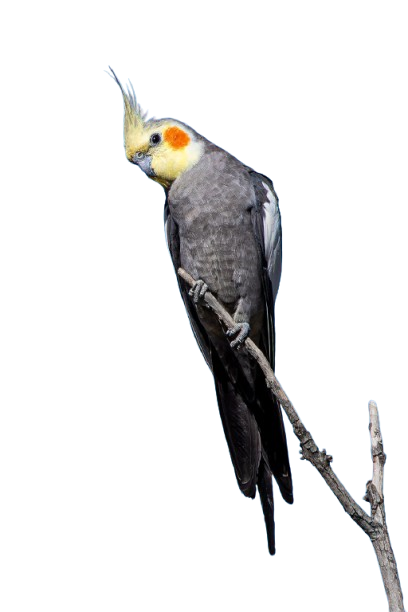
Cockatiels come in several color mutations, including normal grey, lutino, pearl, pied, cinnamon, and white-faced. These are color varieties of the same species, not separate breeds with guaranteed differences in talking ability.
Choose a variety you like, but prioritize health, temperament, and the bird’s individual behavior. Feather color does not tell you whether a cockatiel will become a good talker.
Cockatiels for Sale: Finding the Right Companion
If you are looking for a cockatiel that may learn to talk, take your time choosing the right bird. At Mr. Parrot, the important thing for any prospective owner is to understand that a cockatiel’s personality, health, and upbringing matter just as much as its ability to mimic words. A bird that already whistles or responds to familiar sounds may be a good starting point, but future speech is never guaranteed.
When exploring Cockatiels for sale, ask about the bird’s age, feeding routine, socialization, and previous exposure to human voices. If the seller claims that a cockatiel talks, ask which words or sounds it imitates rather than relying on a general promise. You should also find out whether the bird is fully weaned and eating independently before bringing it home.
Prepare a spacious, safe cage, suitable perches, enrichment toys, a balanced diet, and a quiet place where your new companion can settle in. Daily interaction will help you build trust and create opportunities for speech training.
Whether your cockatiel eventually says “hello” or prefers whistling cheerful tunes, the goal is a healthy, comfortable bird that enjoys interacting with you. Choose a companion you can care for throughout its life, not simply one that promises to talk.
Conclusion
So, can cockatiels talk? Yes, some can learn human words and short phrases, but whistling is often their stronger skill. Males tend to be more vocal, although individual differences matter considerably. With patience, gentle repetition, and positive reinforcement, you can encourage your cockatiel to experiment with new sounds without putting pressure on it.
At Mr. Parrot, I recommend choosing a healthy, well-socialized bird first and treating talking as a welcome bonus. A cockatiel that never speaks can still become a wonderful companion.
Frequently Asked Question
Can cockatiels talk like humans and learn words?

Cockatiels can mimic human words, but they do not speak or hold conversations in the same way people do. Some learn a few recognizable words, while others mainly whistle, sing, or imitate household sounds. Short, repeated phrases and positive reinforcement can encourage speech, but no training method guarantees results. If you are choosing a cockatiel specifically for its talking ability, ask about its existing vocal behavior and remember that every bird is different.